So—you’re officially becoming a Montrealer. You’ve got your acceptance, and you’re this close to booking the U-Haul.
Before you do that, there are a few things you should know—about the city, the move, and what student life actually looks like once you get here.
Don’t worry, I got you. Consider this your unofficial first-year guide to moving to Montreal as a student.
1. Learn the Boroughs Before You Pick Where to Live
Montreal isn’t just one “downtown”—it’s a collection of boroughs, each with its own vibe.
Neighbourhoods like the Plateau, Mile End, and Côte-des-Neiges all offer completely different experiences. If you’re coming from a smaller city, this can feel overwhelming at first.
The easiest fix? Open Google Maps and actually look at the layout of the island.
Understanding where everything is will help you:
Navigate the city more confidently
Choose housing that fits your lifestyle
Avoid long, painful commutes
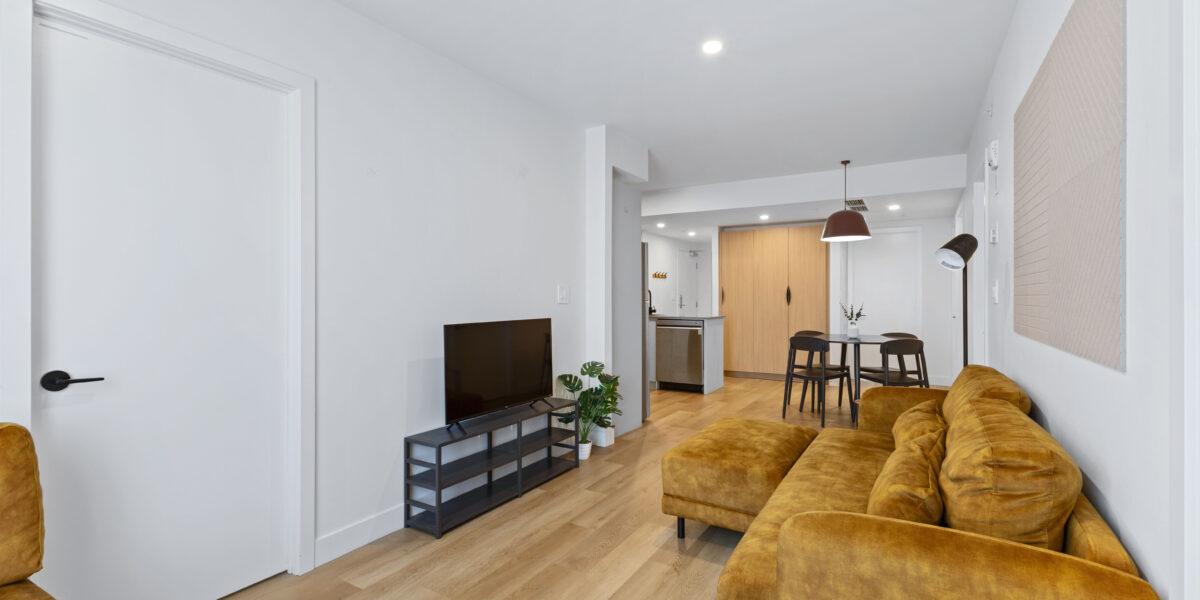
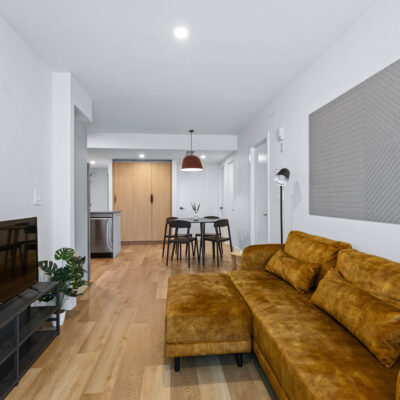
If you want to be central and close to everything, living downtown is your best bet—especially in student-focused spaces like Palay, where you’re right near campus, transit, and everything you actually use day-to-day.
But if you’re after something more creative or laid-back, other boroughs might suit you better. Areas like the Plateau offer a more artistic, neighbourhood feel—something you’ll find in spaces like Le Mojave, which is better suited for a slower, more local pace of student life in Montreal.
2. Yes, It’s Bilingual—But Don’t Overthink It
You already know Montreal is in a French province—but here’s what that actually means day-to-day.
Most people understand both English and French, especially in student-heavy areas. That said, don’t expect everyone to start conversations in English.
If you don’t speak French, you’ll be fine. But if you’re planning on moving to Montreal as a student, learning a bit of conversational French goes a long way.
Start small:
Basic greetings
Ordering food
Asking for directions
If you’re not sure where to start, this Reddit discussion on the best ways to learn French actually breaks it down in practical ways for different learning styles.
It makes everyday interactions smoother—and honestly, it just makes you feel more part of the city.
3. Winter Is Not Optional—Prepare Properly
Let’s be real—winter in Montreal is not for the weak.
If you’re Canadian, you already know the drill. If you’re international (or from somewhere like BC), you’re in for an adjustment.
Montreal cold is:
More humid
More intense
And somehow… colder than expected
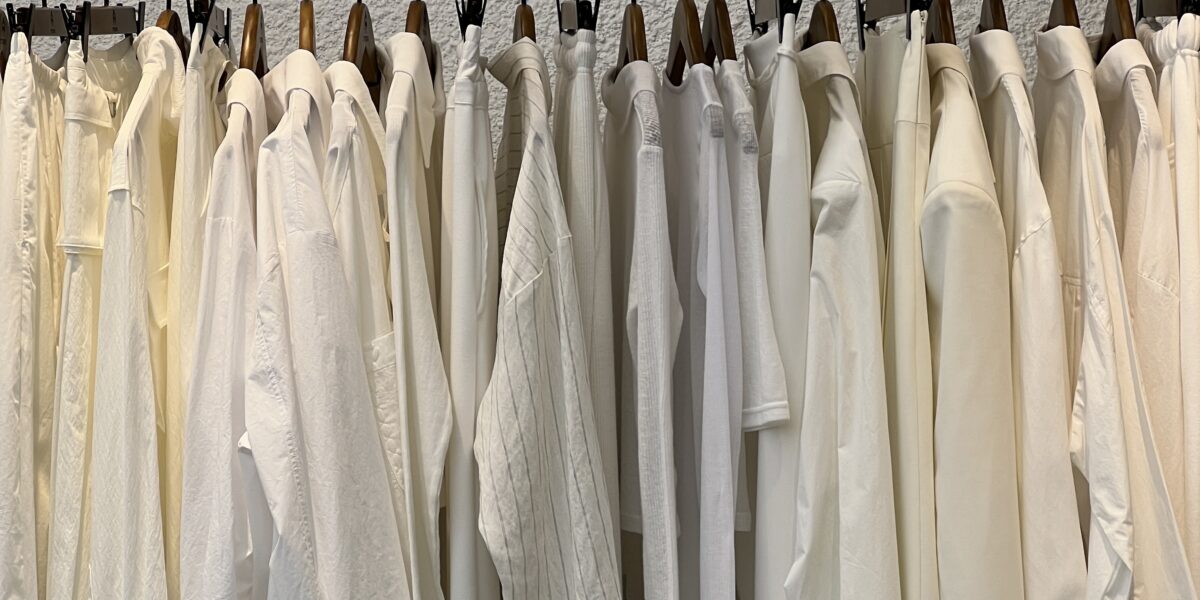
If you’re going to move to Montreal for university, a proper winter coat is non-negotiable—especially if you’re walking or taking transit daily.
Think I’m kidding? Don’t just take my word for it—this guide tothe best winter jackets breaks down exactly what to look for when it comes to staying warm during a Canadian winter.
Think:
Insulated coat
Waterproof boots
Layers (always layers)
You don’t need to overpack—but this is one area you don’t want to underestimate.
4. The Metro Will Be Your Best Friend
If you’ve never used public transit much before, the STM might feel intimidating—but it’s actually very straightforward.
Here’s the simplest way to approach it:
Use Apple Maps or Google Maps
Follow the direction of the train line (it tells you exactly where to go)
Watch the stop count
Even when switching lines, the signage is clear—just follow the arrows.
Also, get yourself an OPUS card as soon as you arrive. Student discounts make a big difference, and you’ll be using transit constantly once you settle into student life in Montreal.
5. July 1st Is Moving Day (Yes, Really)
This one catches almost everyone off guard.
In Montreal, July 1st is basically moving day for the entire city.
It’s chaotic. It’s busy. And it’s very different from most other Canadian cities.
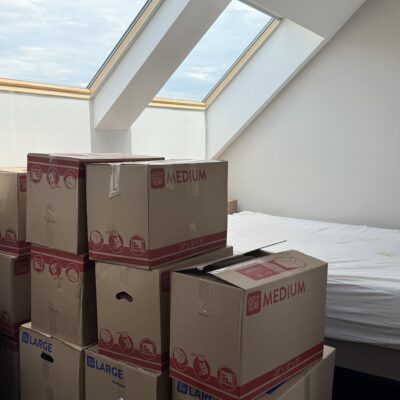
That said, if you’re moving to Montreal as a student, you still have options:
You don’t have to move on July 1st—but it helps to understand why the market feels so competitive around that time.
What to Pack When Moving to Montreal as a Student
Once you’ve got the logistics down, the next question is: what do you actually bring?
Pack Smart—Not Everything
Start with the essentials:
What do you actually use every day?
What can you easily buy once you arrive?
If you love clothes, this is where things get difficult. A good system is rotating items during visits home (especially over the holidays).
If You’re Driving, Bring These Basics
Focus on items you’ll need immediately:
Bedding
Mattress topper
Towels
Basic cleaning supplies
Everything else? Get it in Montreal.
If you want a more detailed breakdown, check out my previous student packing guide—it walks through exactly what’s worth bringing (and what’s not).
This not only saves space—it also forces you to explore your new neighbourhood naturally, which makes settling in way easier.
Final Thoughts: You’ll Figure It Out Faster Than You Think
Moving to a new city is always a little overwhelming. That doesn’t change.
But the more prepared you are, the easier the transition becomes.
And honestly? Moving to Montreal as a student is one of those experiences that feels chaotic at first—but quickly turns into something you wouldn’t trade for anything.
You’ll figure it out. Everyone does.
When students start looking at rent prices, it’s easy to get the sense of:that’s not too expensive.
But renting an apartment is more than just the base rent. Hidden costs can quickly turn I can afford this into what have I done before midterms start.
For most students, renting an apartment is their first time managing real financial responsibility. Without experience, it’s easy to assume the listing price will be your only monthly expense. What often gets missed, however, is the true cost of renting for students—and how much goes beyond the sticker price.
This article breaks down both the financial and psychological realities of renting your first apartment.
1. The Financial Costs That Add Up Quick
Rent is the obvious starting point—but it’s far from the only expense.
Most off-campus apartments don’t include utilities or internet in the listing price. That means your “$900/month” apartment can quickly become much more depending on usage. Heating, electricity, and water fluctuate—especially during winter—making it harder to budget consistently month-to-month.
Furniture is another major cost students underestimate. Even if you bring a few items from home, it’s rarely enough. Outfitting an apartment from scratch can add up quickly. A simple exercise: build your ideal setup on IKEA and check the total—it’s usually higher than expected. On top of that, you’ll also need to consider moving costs at the beginning and end of your lease.
Maintenance expenses can add another layer of monthly costs. In some rental situations, repairs may fall partially—or entirely—on you. An unexpected issue, like a broken appliance during midterms, can turn into a costly and stressful situation.
Transportation also plays a role. Apartments located further from campus may seem cheaper on paper, but it also means budgeting for monthly transit passes or parking, which can add up. In Montréal, most students rely on the Société de transport de Montréal (STM), which offers student-priced monthly passes that provide access to the metro and bus network. While this system is efficient and widely used, it still represents a fixed monthly expense that needs to be factored into your budget. If you’re unfamiliar with pricing, the STM’s transit fare breakdown outlines the different options available for students.
When you add it all up—rent, utilities, furniture, moving, maintenance, transportation…should I continue? Suddenly that “$900/month” doesn’t feel so simple. That’s the true cost of renting for students—and it’s rarely what it seems at first glance.
2. The Psychological Costs No One Talks About
Beyond financial pressure, there are also psychological costs that come with renting your first apartment.
Setting up utilities and internet may sound simple, but doing it for the first time—especially during the start of the semester—can be overwhelming. These are responsibilities most students have never had to manage before. In Québec, services like Hydro-Québec require you to open an account, understand billing cycles, and estimate usage—all while adjusting to a new routine. If you’re unsure where to start, Hydro-Québec provides a helpful ten step guide that outlines what to set up before arriving.
The Hidden Mental Load of Independent Living
Then there’s maintenance and upkeep. Tasks like shovelling snow or handling basic outdoor care are time-consuming and often underestimated. While they may seem minor, they add to your overall mental load.
Cleaning is another adjustment. Going from maintaining a bedroom to managing an entire apartment is a significant shift. Larger spaces require more time and energy, and that added responsibility can quickly become draining.
Commuting also has a mental impact. Long or crowded daily commutes can take a toll over time, affecting both energy levels and productivity. Research has shown that public transit users can experience higher levels of stress and psychological fatigue due to unpredictability, crowding, and time loss. As one study highlighted, “longer and more stressful commutes are directly associated with increased psychological distress.” If you want to explore this further, this City News article on transit and mental health in Montréal breaks it down in full detail.
For students balancing classes, assignments, and part-time work already requires a high level of focus—adding a daily commute can reduce the time and energy available for both academic and personal priorities.
Finally, there’s the uncertainty that can come with individual landlords. While experiences vary, many students have dealt with delayed responses or unresolved maintenance issues—adding another layer of stress.
All of these factors contribute to the true cost of renting for students, making the experience more demanding than expected.
3. Why This Matters for Students
The goal here isn’t to say that off-campus renting is inherently bad. It’s to highlight that the decision involves more than just comparing listed rent prices.
Purpose-built student housing exists because these challenges are so common. These spaces are designed specifically for students, with predictable costs, furnished units, and systems that reduce both financial uncertainty and day-to-day stress.
For example, at Palay, units are fully furnished and include fixed pricing structures, meaning students don’t have to worry about fluctuating utility bills or unexpected setup costs. Amenities like on-site study rooms, gyms, and shared spaces are also integrated into the building, reducing the need for additional spending or long daily commutes.
Instead of managing multiple services, payments, and responsibilities separately, everything is streamlined into one living experience designed around student needs.
At University Apartments, that approach is intentional. Every space is designed with student life in mind—because the people behind it were once students themselves.
So next time you question pricing, take a step back and consider the full picture.
Because when you factor everything in, the true cost of renting for students isn’t just about rent—it’s about time, stress, and overall quality of life.
When do I start looking for student housing in Montréal? It’s one of the most important questions you’ll ask before moving to the city—and it can completely shape your experience.
Leave it too late, and you’re dealing with limited options, higher prices, and unnecessary stress. Start early, and you get better locations, better pricing, and more control over your student rental in Montreal.
So, when should you actually start?
When to Start Looking for Student Housing in Montréal
The ideal time to start looking for student housing in Montréal is 3 to 6 months before your move-in date.For most students moving in September, that means starting your search between January and May. If you’re planning a summer move (May–July), starting even earlier gives you a serious advantage.
Why Timing Matters When Looking for Student Housing in Montréal
Montréal has a unique rental cycle that directly affects availability.
Most leases in Montréal begin on July 1st—known as Québec’s moving day—which creates a city-wide surge in demand. If you’re unfamiliar with how this impacts the rental market, this guide to Québec’s July 1st moving daybreaks down why availability drops so quickly.
At the same time, Montreal student housing follows the academic calendar, meaning competition builds quickly leading into the fall semester.
Location makes things even more competitive. Areas like downtown Montréal (near McGill and Concordia), Milton-Parc, and the Plateau are usually the first to fill because they offer walkability, transit access, and proximity to campus.
Because of this, starting your search in the winter months gives you access to more listings, better pricing, and a wider selection of student apartments in Montréal before demand peaks.
The truth is: the earlier you start looking for apartments near McGill, the more options you’ll have—and the less rushed your decision will feel.
What Happens If You Start Looking for Student Housing Too Late?
If you wait too long to start looking for student housing, your options shrink fast.
You’ll likely run into:
Fewer units in desirable locations
Higher prices due to demand
Limited flexibility with lease terms or roommates
Pressure to commit quickly
Instead of choosing what fits your lifestyle, you end up choosing what’s left—which is not the vibe.
Why Starting Early Matters When Looking for Student Housing
Starting early isn’t just about avoiding stress—it puts you in control.
You’ll have more time to:
Compare different buildings and layouts
Lock in better pricing before demand increases
Coordinate roommates without rushing
Take advantage of early promotions
Exploring student apartments in Montréal ahead of time—especially fully furnished, student-focused options—helps you understand what’s available.
What to Look for When Searching
Once you’ve figured out when to start looking for student housing, focus on what actually matters day-to-day:
Location near campus or transit (McGill, Concordia, UQAM)
Budget and what’s included (Wi-Fi, utilities, heating)
Furnished vs. unfurnished units
Amenities like study spaces, gyms, and security
Lease flexibility and move-in timing
If you’re unsure where to start, browsing trusted options like student apartments near McGill can give you a clearer sense of pricing, layouts, and what’s standard in Montréal.
Best Timeline to Follow
Here’s a simple breakdown to stay on track:
6+ months before (Jan–Feb): Research areas, set your budget, explore options 3–5 months before (Mar–May): Tour units, apply, secure your place 1–2 months before (Jun–Jul): Finalize paperwork and plan your move Last minute (Aug–Sep): Limited options—be ready to act fast
Final Thoughts: Start Early, Thank Yourself Later
At the end of the day, knowing when to start looking for student housing gives you more control, better options, and a smoother move into Montréal.
The earlier you start, the more choice, flexibility, and confidence you’ll have—not just in your apartment, but in your entire university experience.
Because where you live isn’t just a place to sleep—it’s where your routine, your friendships, and your life in Montréal actually begin.
See you next week,
Olivia Lee
How to live in a small apartment is something almost every university student learns quickly after moving out for the first time. If you asked your ten-year-old self what your first apartment would look like, chances are the reality would be very different—and that’s okay.
Your first university apartment is rarely large. In fact, smaller spaces are often the norm for students balancing affordability, location, and proximity to campus. The good news is that living in a smaller space doesn’t mean sacrificing comfort or organization. With the right mindset—and a few strategic tools—you can turn a compact apartment into a space that works efficiently for studying, relaxing, and everyday life.
Here are a few practical strategies for how to live in a small apartment while keeping your space organized and functional.
1. Use Smart Storage to Stay Organized
Many student residences—such as those developed by University Apartments—come fully furnished with the essentials. However, adding a few inexpensive organization tools can make everyday living much easier.
Here are five simple storage solutions from IKEA that work especially well in smaller apartments:
Rolling Utility Cart (RÅSKOG or NISSAFORS) – movable three-tier storage that works beside desks, beds, or in bathrooms.
SKUBB Storage Boxes – foldable boxes that slide under beds or inside closets to organize clothing and accessories.
KALLAX Cube Shelf – versatile vertical shelving that works as a bookshelf, storage unit, or room divider.
VARIERA Shelf Insert – creates extra levels inside cabinets, desks, or closets to maximize space.
VESKEN Narrow Storage Cart – slim vertical storage perfect for tight spaces like bathrooms or beside desks.
2. Organization Starts with Packing
Learning how to live in a small apartment actually begins before you even move in.
The biggest mistake students make when moving to university housing is trying to bring everything they own. Smaller spaces require a more thoughtful approach. Prioritize essentials and leave items that you realistically won’t use on a daily basis.
Packing intentionally not only simplifies moving day—it also prevents clutter from building up in your apartment after you arrive.
3. Choose Housing Designed for Student Living
Another important factor when considering how to live in a small apartment is choosing a space designed with students in mind.
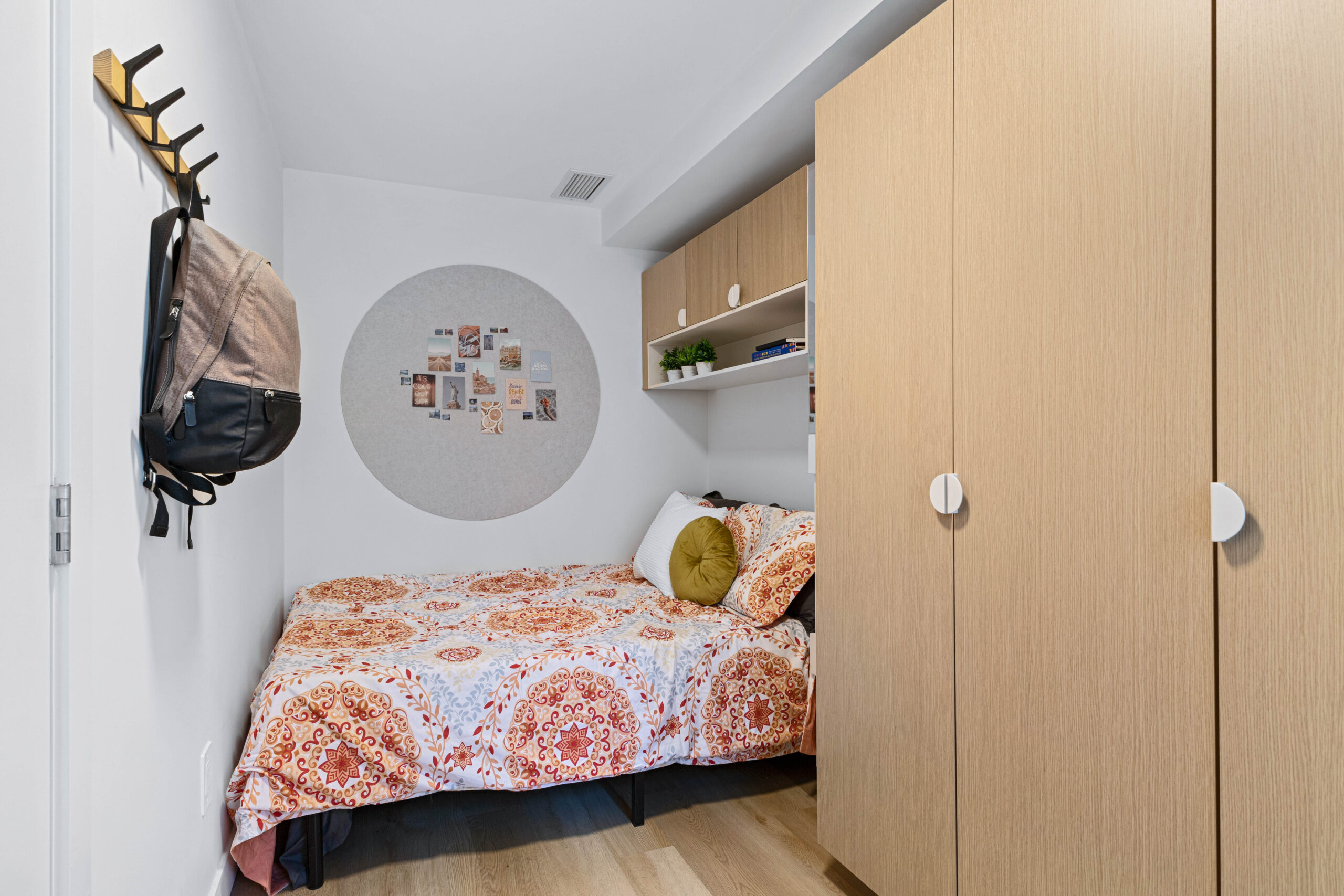
Residences like Palay demonstrate how thoughtful design can make smaller spaces feel far more functional. Student apartments at Palay include built-in wardrobes, overhead storage near the bed, and additional shelving that helps maximize every square foot.
The kitchens are designed with enough cupboard space for roommates to share comfortably, while bathrooms include built-in cabinets to keep toiletries organized. These types of design details make a significant difference when multiple students are living in the same apartment.
When storage is integrated into the layout itself, smaller apartments become much easier to manage.
Your First Apartment Is a Starting Point
Your first university apartment is not meant to be your forever home.
In many ways, it’s the space that teaches you what works—and what doesn’t—for the places you’ll live in later. Smaller apartments encourage better organization, smarter storage habits, and a clearer understanding of what you actually need.
Learning how to live in a small apartment is simply part of the process of becoming independent.
And while your first place may be compact, it’s also where some of your most memorable university experiences will begin.
See you next week,
Olivia Lee
At some point in your university career, you will face the question: Do I live near campus — or do I commute?
Both options have advantages. Both have trade-offs. And the right choice depends on what you value most during these few years that move faster than you think.
If you are weighing the decision, here is a clear breakdown of the three main pros and cons of living near campus compared to commuting.
The Pros of Living Near Campus
1. Fewer Barriers = Higher Motivation
No traffic. No parking hunt. No calculating whether it is “worth it” to leave the house.
The average university attendance rate is estimated to be under 70%, meaning students attend roughly two out of every three lectures. When you add a commute — starting your car, navigating traffic, paying for parking, driving home during rush hour — it becomes easier to justify skipping.
When you live within walking distance, those excuses shrink.
You remove friction from your day. You wake up, you walk, you arrive. That simplicity matters — especially when university is likely one of the largest financial investments you will make in your early adulthood.
If proximity increases your likelihood of showing up consistently, that is not a small benefit.
2. Stronger Social Access
Living in the heart of a metropolitan area changes your university experience.
Take Palay as an example. Located downtown, steps from campus and public transit, the logistics of daily life become significantly easier. Group project at 8 p.m.? You are five minutes away. Club meeting? No need to calculate travel time. Dinner with friends? The restaurant is around the corner.
Social engagement becomes less of a production and more of a possibility.
You are not factoring in parking, gas, or how you will get home late at night. That reduction in logistical stress often leads to more spontaneous participation — academically and socially.
University is not only about lectures. It is about the conversations before and after them.
3. Furnished Living = Lower Stress
In many metropolitan student housing communities — such as University Apartments or Palay — units are furnished.
At first, buying your own couch and bed may feel more “grown up.” But consider the cost of purchasing those items. Now consider moving them. Now consider storing them between leases.
Especially in early undergraduate years, reducing financial and logistical burdens is valuable. A furnished apartment allows you to focus on settling into university life instead of assembling it piece by piece.
Sometimes simplicity is the upgrade.
The Cons of Living Near Campus
1. Less Physical Space
Campus-adjacent living often means smaller square footage. If you commute from farther away, you may live in a larger condo or shared house. More storage. More room. Possibly even a yard.
But with more space comes more responsibility. Lawn care. Snow removal. Increased cleaning. Maintenance. All on top of coursework.
The question becomes: do you want more space — or fewer obligations?
2. Difficulty Switching Off
Speaking from experience, one challenge of living near campus is feeling constantly immersed in school.
When your classroom is steps away, it can be harder to mentally disconnect. You may feel perpetually in “academic mode.”
However, proximity also correlates with higher academic performance. Students who live closer to campus often demonstrate stronger time management and greater access to academic resources simply because those resources are easier to reach.
It is both a benefit and a drawback — depending on how you manage it.
3. Noise and Urban Energy
Campus-adjacent neighbourhoods are active. Late-night foot traffic. Events. Construction. City sounds.
If you are coming from a rural or suburban background, the transition to a busy downtown environment can feel overwhelming at first. Urban living requires adjustment.
But for some, that energy becomes part of the appeal.
So, What Matters Most?
Every living situation has positives and negatives.
The real question is not which option is universally better — it is which option aligns with your priorities.
As a student, your education should remain central. If living within walking distance increases attendance, engagement, and access to campus resources, that benefit deserves serious weight.
Yes, grades alone do not define success. But consistent presence often leads to stronger performance.
Sometimes the first step toward maximizing your university experience is simply reducing the friction between you and the classroom.
Choose the environment that supports the version of yourself you are trying to build.