
If you’re living near campus in Montréal — especially in student-focused housing like Palay — you get more than proximity to class. You get a city full of things to actually do between lectures: cultural spots, outdoor hangouts, creative experiences, and study breaks that feel like a reward. Downtown living turns student life from “get there and back” into “go explore, learn, and live.”
Here’s a curated list of the top 10 student-approved things to do in Montréal — all great for study breaks, weekend plans, and making the most of city life without long commutes or big costs.
Historic cobblestone streets, riverside views, street performers, and tons of photo ops — Vieux-Port (Old Port) is where Montréal’s European-meets-urban energy really shines. Great vibes + free things to see make it a go-to for students.
Even if you’re not a history buff, this stunning church’s architecture and stained glass are worth a peek — and a perfect backdrop for photos. It’s one of the city’s most iconic spots.
Whether it’s music, dance, theatre, or free community events nearby, this arts hub is perfect for students who want culture without splurging. Many student deals happen here throughout the year.
Need a productive day? Anticafe lets you pay for time instead of drinks — perfect for a cozy study + treat session when libraries feel too quiet.
Fresh exhibitions and creative perspectives make this museum a great break from textbooks — and often student discount friendly.
Big greenspace, biking paths, picnic spots, and chill study sessions — this park is a downtown favourite for when you just need air, nature, and a break from screens.
Interactive exhibits, tech fun, and brain-break activities give you something hands-on when you’ve hit that mid-term wall. Located in the Old Port, it’s easy to reach from campus.
This environmental museum on Île Sainte-Hélène brings nature and interactive exhibits together — another creative study break spot with learning built in.
Groups like MTL Detours offer historical and neighbourhood tours that turn the city into a classroom you actually want to explore. They’re a great way to learn the city’s stories.
Arcade MTL’s retro games and relaxed bar vibe are perfect for friend hangs, post-study resets, or casual night outs — no pressure, just fun.
Why These Matter for Students
Living close to campus — especially in a student-oriented environment like University Apartments — transforms your Montréal experience. Instead of spending time crammed into a car or calculating bus/shuttle stop times, you’re just there — at the park, in Old Port, in cafés, at museums, and at shows.
This list isn’t just about “touristy stuff.” It’s about real student life: places you can visit between classes, plan evenings without spending a fortune, and experience the city in a way that feels natural. Montréal is big on culture, green space, public art, and community events — and when you’re based downtown (like you are at Palay), you’re just steps from all of it.
Whether you’re looking to recharge outdoors, check out world-class art, or just find a new study vibe, there’s always somewhere to go, and something to do


At some point in your university career, you will face the question:
Do I live near campus — or do I commute?
Both options have advantages. Both have trade-offs. And the right choice depends on what you value most during these few years that move faster than you think.
If you are weighing the decision, here is a clear breakdown of the three main pros and cons of living near campus compared to commuting.
The Pros of Living Near Campus
1. Fewer Barriers = Higher Motivation
No traffic. No parking hunt. No calculating whether it is “worth it” to leave the house.
The average university attendance rate is estimated to be under 70%, meaning students attend roughly two out of every three lectures. When you add a commute — starting your car, navigating traffic, paying for parking, driving home during rush hour — it becomes easier to justify skipping.
When you live within walking distance, those excuses shrink.
You remove friction from your day. You wake up, you walk, you arrive. That simplicity matters — especially when university is likely one of the largest financial investments you will make in your early adulthood.
If proximity increases your likelihood of showing up consistently, that is not a small benefit.
2. Stronger Social Access
Living in the heart of a metropolitan area changes your university experience.
Take Palay as an example. Located downtown, steps from campus and public transit, the logistics of daily life become significantly easier. Group project at 8 p.m.? You are five minutes away. Club meeting? No need to calculate travel time. Dinner with friends? The restaurant is around the corner.
Social engagement becomes less of a production and more of a possibility.
You are not factoring in parking, gas, or how you will get home late at night. That reduction in logistical stress often leads to more spontaneous participation — academically and socially.
University is not only about lectures. It is about the conversations before and after them.
3. Furnished Living = Lower Stress
In many metropolitan student housing communities — such as University Apartments or Palay — units are furnished.
At first, buying your own couch and bed may feel more “grown up.” But consider the cost of purchasing those items. Now consider moving them. Now consider storing them between leases.
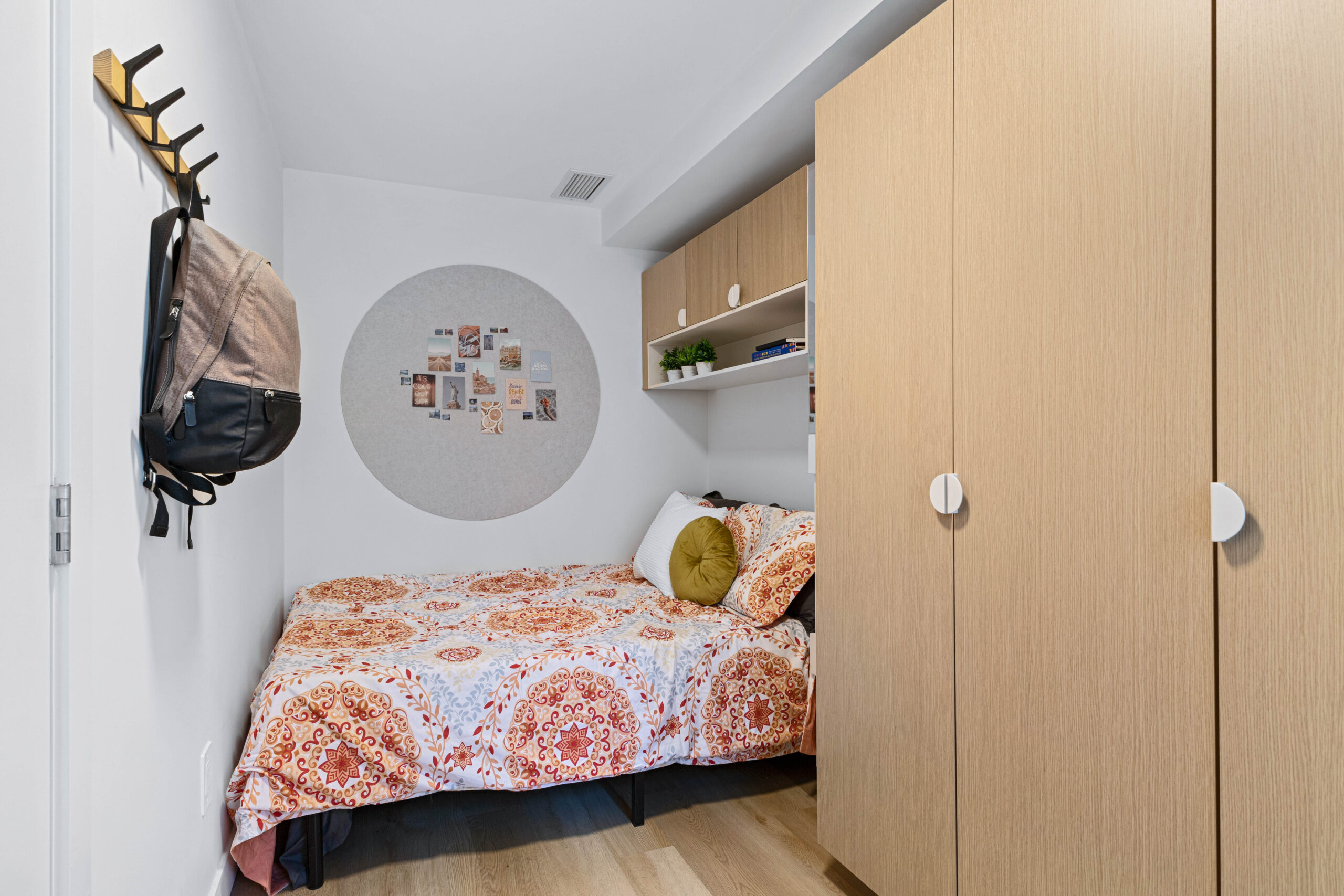
Especially in early undergraduate years, reducing financial and logistical burdens is valuable. A furnished apartment allows you to focus on settling into university life instead of assembling it piece by piece.
Sometimes simplicity is the upgrade.
The Cons of Living Near Campus
1. Less Physical Space
Campus-adjacent living often means smaller square footage. If you commute from farther away, you may live in a larger condo or shared house. More storage. More room. Possibly even a yard.
But with more space comes more responsibility. Lawn care. Snow removal. Increased cleaning. Maintenance. All on top of coursework.
The question becomes: do you want more space — or fewer obligations?

2. Difficulty Switching Off
Speaking from experience, one challenge of living near campus is feeling constantly immersed in school.
When your classroom is steps away, it can be harder to mentally disconnect. You may feel perpetually in “academic mode.”
However, proximity also correlates with higher academic performance. Students who live closer to campus often demonstrate stronger time management and greater access to academic resources simply because those resources are easier to reach.
It is both a benefit and a drawback — depending on how you manage it.
3. Noise and Urban Energy
Campus-adjacent neighbourhoods are active. Late-night foot traffic. Events. Construction. City sounds.
If you are coming from a rural or suburban background, the transition to a busy downtown environment can feel overwhelming at first. Urban living requires adjustment.
But for some, that energy becomes part of the appeal.
So, What Matters Most?
Every living situation has positives and negatives.
The real question is not which option is universally better — it is which option aligns with your priorities.
As a student, your education should remain central. If living within walking distance increases attendance, engagement, and access to campus resources, that benefit deserves serious weight.
Yes, grades alone do not define success. But consistent presence often leads to stronger performance.
Sometimes the first step toward maximizing your university experience is simply reducing the friction between you and the classroom.
Choose the environment that supports the version of yourself you are trying to build.
See you next week.
Olivia
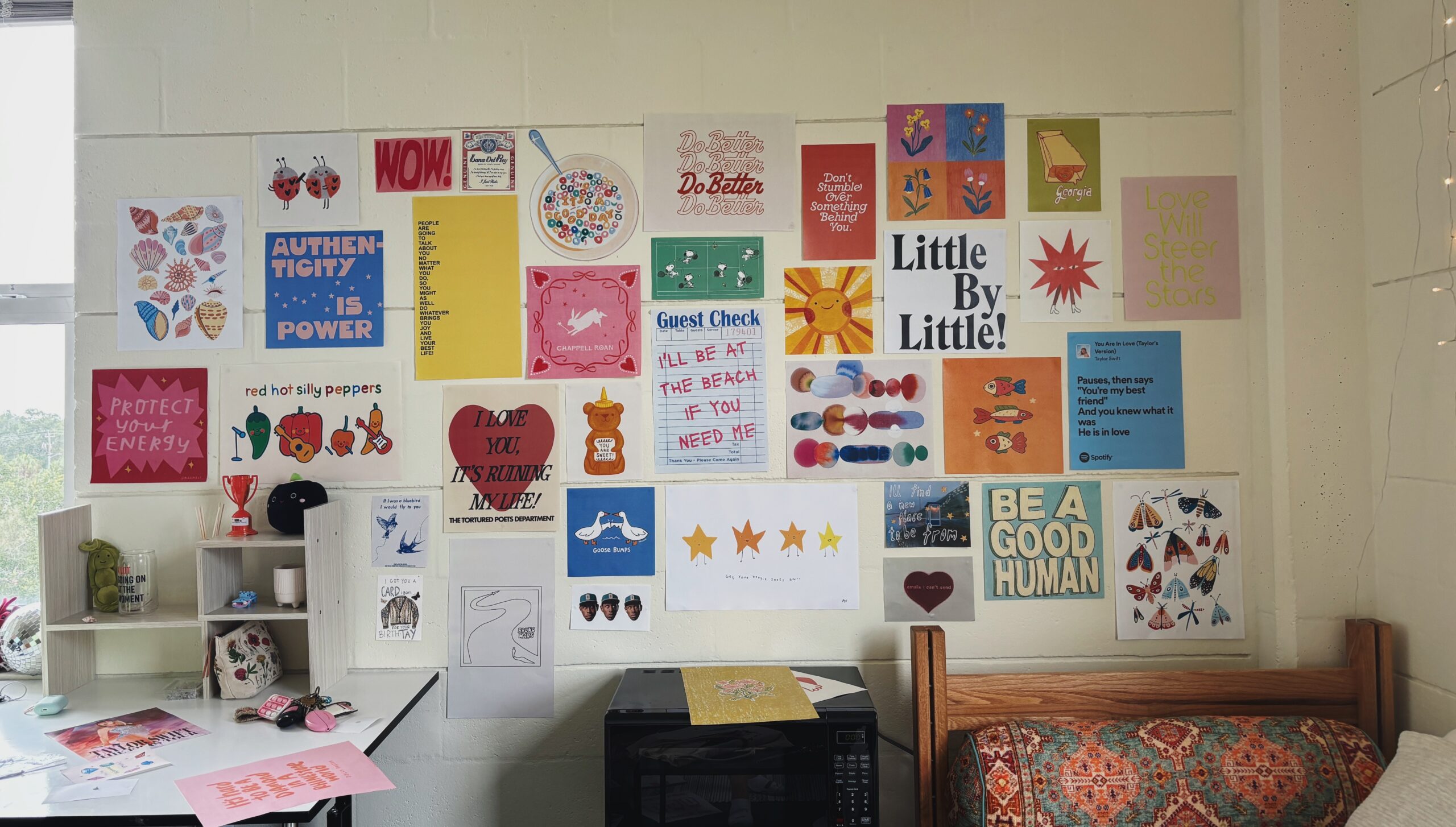

Living with other people is like being on a team — except the practice never ends, there’s no coach, and everyone has a different idea of what “clean” means.
When I think back on university, I always reflect on my second year. It was my best year in terms of roommates. We were close, comfortable, aligned. But here’s the twist: it wasn’t my best year overall.
My third and fourth years were better socially, academically, personally. And in those years? I wasn’t close to my roommates. We weren’t friends. We didn’t hang out. Even now, we’re not connected in any meaningful way.
But I genuinely liked living with them.
That’s something we don’t talk about enough. Living with people you don’t know — or don’t become best friends with — doesn’t have to be dramatic. It can simply be functional. Respectful. Normal.
And that’s often what student housing communities are built around. At places like Palay, the focus isn’t just on finding your lifelong best friend — it’s on creating an environment where coexistence feels natural. Shared lounges, study spaces, and community events exist to make connection possible, but not forced. You can build friendships in common rooms or simply appreciate the quiet comfort of knowing other students are living alongside you.
Sometimes the win isn’t a picture-perfect roommate story. It’s having a space that supports your life — socially when you want it, independently when you need it.
Here’s how to make it work.
1. Set Boundaries Early
The most important conversations happen at the beginning.
According to guidance on roommate boundary-setting from Therapy Trainings, healthy shared living starts with clarity — not assumptions. That means discussing expectations around privacy, guests, quiet hours, and shared responsibilities before tension builds.
Start with personal items. Is your home a “what’s mine is yours” situation? Or is it strictly separate?
There’s no right answer — only a clear one.
Unspoken expectations are where resentment grows. You may think it’s obvious that your olive oil isn’t communal. Your roommate may think the opposite. Five dollars’ worth of condiments should not be the hill your lease dies on.
Boundaries are not about being rigid. They’re about protecting the comfort of everyone in the space.
2. Divide Cleaning Like Adults
Cleaning is rarely about cleanliness. It’s about fairness.
Apartment Therapy suggests that splitting chores evenly — rather than informally — prevents conflict. The key? Don’t divide tasks like dishes down the middle. That’s a daily friction point. Instead, rotate larger responsibilities weekly.
One person takes garbage and recycling. Another vacuums and wipes surfaces. Switch the following week.
A simple chore rotation avoids the silent scorekeeping that quietly ruins roommate dynamics.
And yes — a chore wheel may feel elementary. But nothing feels worse than being the only one scrubbing the stove before your midterm.
3. Be Strategic About Groceries
Sharing food is rarely ideal. But selectively sharing can make sense.
Milk. Bread. Condiments. Cleaning supplies.
In my early years of living away from home, I wasted so much food because I didn’t know how to shop for one person. Splitting certain staples reduced waste and saved money. It also made the apartment feel fuller — like the fridge wasn’t just survival-mode stocked.
The key is clarity. Decide together what’s communal and what’s not. Label if needed. It’s practical, not passive aggressive.
4. Remember: It’s Still Your Space
So many people become timid when living with strangers. As if they’re temporary guests in a space they equally pay for.
You are not.
You deserve to feel at home.
Yes, respect matters. Noise awareness matters. Communication matters when bringing people over. But you don’t need to shrink your lifestyle to accommodate someone else’s.
Different schedules. Different social habits. Different routines.
Coexistence does not require personality erasure.
As highlighted in University Apartments’ discussion on roommates transitioning from strangers to friends, shared living doesn’t always lead to deep friendship — and that’s okay. Sometimes it leads to mutual understanding, quiet support, or simply a stable environment where you can focus on school, growth, and your own circle.
That’s enough.
5. Stop Overthinking the Worst

We tend to overthink the negative because that’s what people share.
Roommate horror stories spread faster than stories about calm, ordinary living. But the truth is, most roommate situations are not extreme. They’re just… fine.
Living with a stranger can be awful. That fear is valid.
But it can also be neutral. Respectful. Quiet. Supportive in small, invisible ways.
You can live beside someone without becoming best friends. You can find yourself without dramatic conflict. You can focus on school, relationships, and growth without your living situation defining your year.
If you can overthink the worst, you can overthink the best.
And you can absolutely overthink the normal.
Sometimes living with a stranger isn’t a transformative experience. It’s just a chapter where you learned how to share space without losing yourself.
And honestly? That’s a skill that lasts longer than any lease.
See you next week,
Olivia Lee
There’s this idea that living alone in university is the end goal.
That once you get your own space, your own routine, your own quiet — you’ve made it.
But if you’ve ever lived in student accommodations, especially in a shared apartment space like Palay or University Apartments, you know that’s not really the full picture.
Because the truth is: having roommates in university isn’t just cheaper or more convenient — it fundamentally changes how connected, grounded, and supported you feel during one of the biggest transitions of your life.
And yes — choosing to live alone might feel like freedom, but it also comes with something no one warns you about: missing out.
Comfort
Change is inevitable. And uncomfortable. And honestly? Kind of brutal.
Starting university — especially if it means moving cities, provinces, or countries — is one of the biggest shifts most 18-year-olds will ever experience. One day you’re coming home to the same people you’ve known your entire life. The next day, you’re starting from zero.
University does a decent job preparing you for the “real world.”
It does a terrible job preparing you for being alone in it.

This is where roommates — and student housing communities — matter more than we realize. Living with others creates a buffer during that high-shock transition period between high school and university. You’re not coming home to familiar faces, but you are coming home to people who are just as new, unsure, and overwhelmed as you are.
Think of it as a built-in “have you met Ted?” moment — but for adulthood.
There’s a reason so many student housing communities are designed around shared spaces. According to reflections from students living in purpose-built housing, roommates often become the first real sense of stability when everything else feels unfamiliar. You’re adjusting together. Failing together. Figuring it out in real time — together.
That shared discomfort? That’s comfort.
Social Life & Connection
We already know change is hard. What we talk about less is how isolating it can be.
A majority of university students report feeling lonely at some point during their studies. New coursework, new expectations, new routines — and somehow you’re also supposed to magically build a social life from scratch.
This is where roommates do more than just exist in the same space as you.

When you live in student housing — especially in communities intentionally built for connection — you’re almost never actually alone. There’s someone to complain to about your three-hour lab. Someone who understands why you’re stressed during midterms. Someone to sit with in silence when the day was just… a lot.
And yes, sometimes that looks like going out — splitting Ubers, getting ready together, pre-drinks in the kitchen. But sometimes it’s smaller than that. Your roommate popping into the living room and asking if anyone wants to go get a sweet treat.
Those moments don’t feel monumental when they’re happening. They feel normal.
But that’s the magic of shared living in student housing communities like Palay: connection becomes part of your routine, not something you have to chase.
And when you have that, loneliness doesn’t stand a chance.
Routine & Accountability
Skipping class is inevitable. We’ve all done it.
For the first time, no one is calling you out of bed. No one is checking attendance. No one cares if you show up — and that freedom is intoxicating… until it’s not.
Living alone makes it very easy to disappear into your own bubble. There’s no external nudge. No subtle guilt. No “are you coming?” energy.
But roommates change that dynamic. When you live with people — especially those in similar programs or routines — accountability becomes passive. You don’t need someone lecturing you. You just need someone putting on their coat at the same time you’re thinking about staying in bed.
Research and lived experience both point to this: supportive roommates naturally encourage better habits. You walk to class together. You study together. You procrastinate together — but you also recover together.
In student housing, routines form without effort. Shared schedules, shared study spots, shared motivation. Even when you’re distracting each other, you’re still moving through university with people instead of in isolation.
And that makes a difference.
Final Thoughts
Let’s be honest.
Do roommates mean less privacy? Absolutely.
Do they force you to adapt to other lifestyles? Yep.
Do they slow down that hyper-independent “I live alone now” fantasy? For sure.
But… what’s the rush?
University has a funny way of making you feel behind — like you should already have everything figured out. Meanwhile, you’re 18, 19, maybe 20 — with so much time ahead of you.
The one thing you don’t have unlimited time for?
Those few years in student housing.
Shared kitchens. Late nights. Inside jokes. Group chats. Walking to class together. Coming home to noise instead of silence.
Living alone will come. Independence will come. Quiet will come.
But the version of life where you’re surrounded by people — where connection is built into your day — that’s fleeting.
So have a roommate.
Share your space.
Create the memories.
Because when you finally get everything you thought you wanted — your own place, your own routine, your own quiet — it’ll feel even better knowing you didn’t skip this part.
And if after all of that… you still think living alone is better?
That’s wild.
See you next week,
Liv Lee

Yes, we all know Valentine’s Day is kind of fake.
It’s commercial, it’s overdone, and technically… it’s not even a real holiday. And yet – I know you still want the flowers.
University has a way of reshaping how you think about relationships. Not just romantic ones, but the everyday connections that quietly structure your life. The ones formed through routine, proximity, and shared space rather than intention. When people talk about relationships in university, they usually focus on finding your people. What they don’t talk about is how many of your most meaningful relationships aren’t chosen at all. They just… happen.
They start in classrooms.
They carry over from past versions of you.
And eventually, they follow you home.
In this article, I’m going to talk about the actual relationships we experience in university—the ones every student goes through, but we almost never name.
1. The Academic Relationship
No one really warns you about the relationships that only exist inside a classroom. Not friendships, not strangers—something in between. The kind that make total sense in the moment and quietly disappear once the semester ends.
There’s the person you sit beside every Monday and Wednesday. You chose that seat early on and stuck with it—because most of us do. There’s comfort in familiarity, in knowing where you belong in a room, even if you never talk about it. You make small comments before class, share notes when someone misses a slide, maybe walk out together once or twice. In later undergrad years, this gets easier when you start recognizing the same faces in your program. But in electives, it’s brand new territory. That seatmate becomes your constant for twelve weeks… and then you never see them again. A real connection, built entirely on routine and proximity, with no obligation to last beyond the lecture hall.
Then there are group projects—a different kind of academic relationship, with much higher stakes. Group work forces interaction: meetings, shared deadlines, late-night stress. Sometimes it works. Sometimes it very much doesn’t. If you liked your group, you’ll wave in the hallway, maybe stop for a quick “how are classes going?” If you didn’t, it’s the tight smile or mutual avoidance, like you both silently agreed to erase the experience. And that’s normal. Group work is designed to teach collaboration, but it also reveals compatibility—or the lack of it. We’ve all been the group member someone didn’t love, and we’ve all been relieved to never work with certain people again.
These academic relationships aren’t dramatic or deep, but they’re real. They shape your days, your routines, and your sense of belonging—sometimes without you realizing it—before quietly fading when the semester does.
2. The Transitional Relationship
These are the people from past versions of you—the ones who make a brief reappearance and then quietly fade again. Not quite friends, not quite strangers. Just familiar enough to feel something, not close enough to do anything about it.
It’s the person you talked to for twenty minutes at a bar last weekend, now suddenly sitting three rows ahead of you in class. No follow-up. No acknowledgment. Just mutual amnesia. Eye contact avoided on both sides, as if pretending it never happened is the most respectful option. And honestly, that’s the best part. There’s comfort in the unspoken agreement to let the moment stay exactly where it belongs.

Then there are the people you graduated high school with. How this plays out depends entirely on where you go to university. For me, a lot of familiar faces followed the same path. In first year, it’s all polite recognition—smiles, waves, maybe even a quick hello in passing. By third year, it shifts. The waves stop. The smiles fade. You pass each other in the hallway like two people who share a history neither of you needs to revisit. Sometimes you see them every day. You just don’t acknowledge it anymore.
It feels sad if you overthink it—but it isn’t. University is built on transition. Growth asks for movement, and movement naturally leaves some relationships behind. These aren’t losses so much as evidence that you’re no longer who you were when those connections made sense.
3. The People You Go Home To
Yes, this relationship starts in the most practical ways possible—shared kitchens, yelling “get out of the bathroom,” dividing chores, learning each other’s schedules. But it very quickly becomes more than that.
The relationship you have with the people you go home to shifts constantly. It depends on whether you knew them before moving in, how close you become, how compatible your routines are, and where you are in your own life. There are so many variables, and none of them guarantee anything. Some roommates stay roommates. Others quietly turn into something much bigger.

My favourite roommate relationship was in second year. I say that a lot, and it still feels true every time. There were three of us—four, technically, but we don’t need to get into that—and we were people who never would have chosen each other in any other setting. Different backgrounds, different social circles, different versions of university life. We wouldn’t have looked twice at each other in the hallway. And yet, we became each other’s people. That’s the quiet magic of student housing: it brings together people who would have otherwise passed by, and asks them to figure it out anyway.
When I was working with University Apartments at Wester-Land, one of my favourite things to watch was move-in day. Strangers meeting their roommates for the first time—nervous, polite, unsure. It’s a strange kind of fear, realizing you’re about to live with someone you don’t know at all, for what feels like forever. But it’s also beautiful. Watching unfamiliar faces become comfortable within hours reminded me how quickly shared space can turn into shared life. Just like it did for me.
Final Thoughts
Relationships in university are rarely fixed. They shift, stretch, soften, and sometimes disappear altogether. The person you were inseparable from in first year can feel like a distant memory by third—and that’s not a failure. It’s normal.
When we talk about university, we tend to focus on how it’s supposed to look: lifelong friends, perfectly aligned roommates, seamless connections. We don’t talk enough about how it actually unfolds. In reality, you’ll have a group member you can’t stand. The person you sat beside every day in high school French won’t even glance at you by third-year psychology. The roommates who felt like family in second year might drift into occasional check-ins, or quiet distance.
And somehow, none of that negates what those relationships were when they mattered. They still shaped your days. They still held you during a specific version of your life. What lasts isn’t always the people—it’s the memories, the stories, the moments you’ll return to long after university ends. And that’s enough.
See you next week,
Liv